
A slow puncture is easy to miss. Unlike a blowout, there’s no dramatic moment – just a tyre that keeps losing pressure, a steering wheel that pulls slightly, or a ride that feels a little off. By the time most drivers notice something is wrong, the damage may already be done.
What Causes a Slow Puncture?
Slow punctures happen when air escapes from a tyre gradually through a small hole or opening. The leak occurs whether the car is moving or parked. There are four main causes:
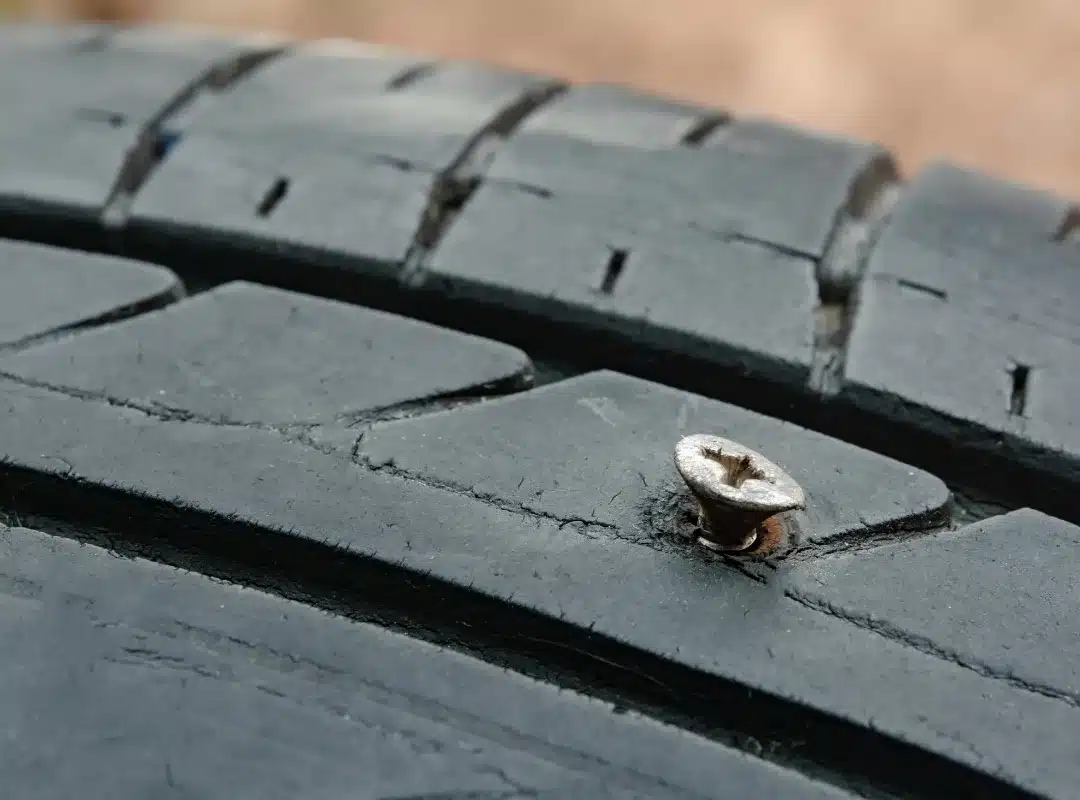
- Sharp debris: Nails, screws, or stones pierce the tyre rubber and create a small but persistent hole.
- Wheel corrosion: Corrosion on the rim can create gaps between the tyre and the wheel, allowing air to escape slowly.
- Age and wear: As tyre rubber thins over time, small holes can form – especially on tyres with low tread.
- Pothole or impact damage: A hard impact can cause a hole to form in the tyre without immediately deflating it.
A faulty valve stem is another common culprit. The valve is what you use to inflate the tyre, and a damaged or deteriorated valve can let air out steadily over days.
How to Tell If You Have a Slow Puncture
Slow punctures rarely announce themselves loudly. You’re more likely to notice them through changes in how your car handles. Watch for these four signs:
- Recurring low pressure: If one tyre keeps losing pressure after you top it up, a slow puncture is likely the cause.
- Pulling or drifting: If your car pulls to one side on a flat road, reduced pressure in one tyre is a common reason.
- Vibrating steering wheel: A tyre losing air creates an imbalance in the wheel, which you often feel as vibration – especially at higher speeds.
- Reduced responsiveness: If your car feels less sharp than usual or the suspension feels harder, check your tyre pressures.
A slow puncture can take anywhere from a few days to a full week to fully deflate a tyre, depending on the size of the hole, tyre age, and current pressure. Don’t wait for it to go flat before acting.
Can a Slow Puncture Be Repaired?
Yes – if the puncture meets three specific criteria set out under British Standard BSAU159, the UK’s standard for safe minor tyre repairs.
A slow puncture is repairable when:
- The puncture is in the central three-quarters of the tyre. This area is known as the minor repair area. Anything outside of it – including the shoulder and sidewall – cannot be safely repaired.
- The damaged area is no larger than 6mm in diameter. A nail or screw typically falls within this limit. A bolt or larger piece of debris usually does not.
- The tread depth is above 1.6mm. This is the legal minimum in the UK. Repairing a tyre that’s already below the limit is not permitted – and driving on one is illegal.
If all three conditions are met, a professional repair is a safe and cost-effective fix.
When a Repair Is Not Possible
Some punctures cannot be repaired. In those cases, the tyre must be replaced. Here’s when a repair is off the table:
- The puncture is in the sidewall or shoulder. The sidewall flexes constantly under load, so a repair patch won’t hold – and drilling into this area can weaken the tyre’s structure.
- The damage is larger than 6mm. Larger holes cause structural damage that a patch cannot reliably seal.
- The tyre has been driven on while flat. Driving on a deflated tyre crushes the sidewall between the rim and the road. Even if the original puncture was repairable, the sidewall damage that follows usually isn’t.
- The tyre has a bulge, cut, or exposed cord. These are signs of structural failure – repair is not an option.
- The tyre is a run-flat. Run-flat tyres have reinforced sidewalls that can mask internal damage after a puncture. Because the extent of structural damage is difficult to assess, they are generally not repaired.
If you’re unsure whether your tyre is repairable, don’t guess. A professional inspection takes a matter of minutes and removes all doubt.
What Happens If You Ignore a Slow Puncture?
Ignoring a slow puncture is not just inconvenient – it’s a safety risk. Here’s what you’re exposing yourself to:
- Impaired handling and braking. Low tyre pressure reduces your car’s responsiveness and increases stopping distances – particularly in wet conditions.
- Higher fuel consumption. Under-inflated tyres create more friction and drag, which means your engine works harder and burns more fuel.
- Irreparable tyre damage. The longer you drive on a deflating tyre, the greater the chance of sidewall damage. What starts as a £20 repair can turn into a £150+ tyre replacement.
- Risk of a sudden blowout. A slow puncture can become a rapid one at any point. At motorway speeds, a blowout is dangerous.
- Legal consequences. Driving on a flat or significantly under-inflated tyre is illegal in the UK. A defective tyre can result in a fine and penalty points.
The moment you suspect a slow puncture, stop making unnecessary journeys and get it assessed.
How a Professional Repairs a Slow Puncture
A proper slow puncture repair follows the process set out under British Standard BSAU159. Here’s what that involves:
- The tyre is removed from the rim. This is mandatory. Repairs carried out without removing the tyre are not compliant with UK standards and are considered unsafe.
- The tyre is inspected inside and out. Both the puncture site and the internal lining are checked for additional damage before any repair is attempted.
- The puncture location and size are assessed. If it falls within the minor repair area and is under 6mm, the repair proceeds.
- The damaged area is prepared. The puncture channel is trimmed and cleaned to remove loose or damaged material.
- A combination patch-plug is applied from the inside. This seals the hole and reinforces the inner lining. A plug alone – inserted from the outside – does not meet BSAU159 standards and should not be used as a permanent fix.
- The tyre is remounted and inflated. Pressure is set to the manufacturer’s specification, and the repair is checked.
The whole process typically takes 20 to 30 minutes.